Reading Notes: *Reproduction Institutions* and *Intimate Relationships*
I chatted with an AI for three hours and wrote two sets of reading notes (to test the AI’s capabilities, I deliberately did not make any edits to the AI-generated content).
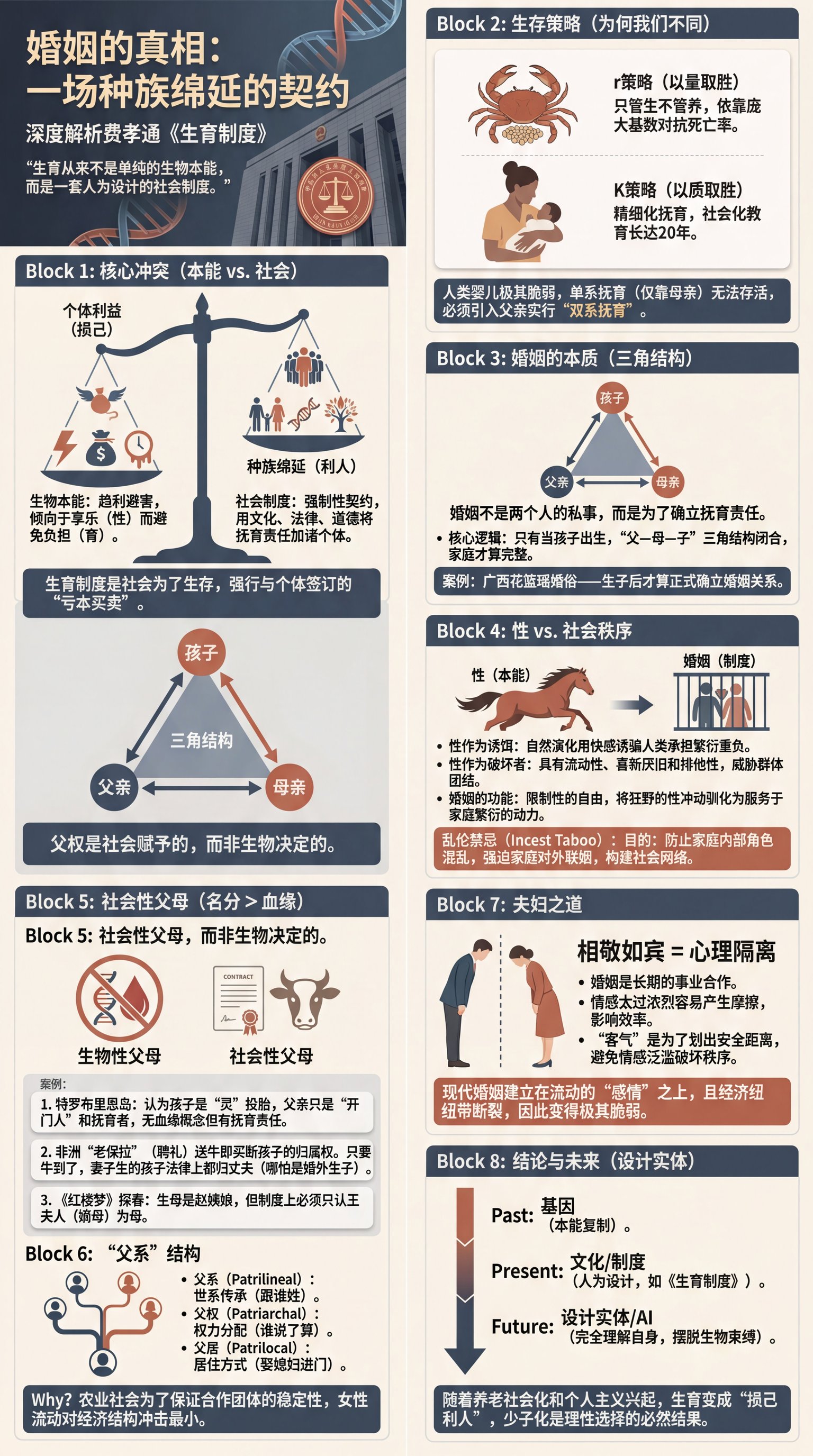 Fei Xiaotong’s *Reproduction Institutions*: The Essence of Marriage Is a Contract for the Continuation of the Race
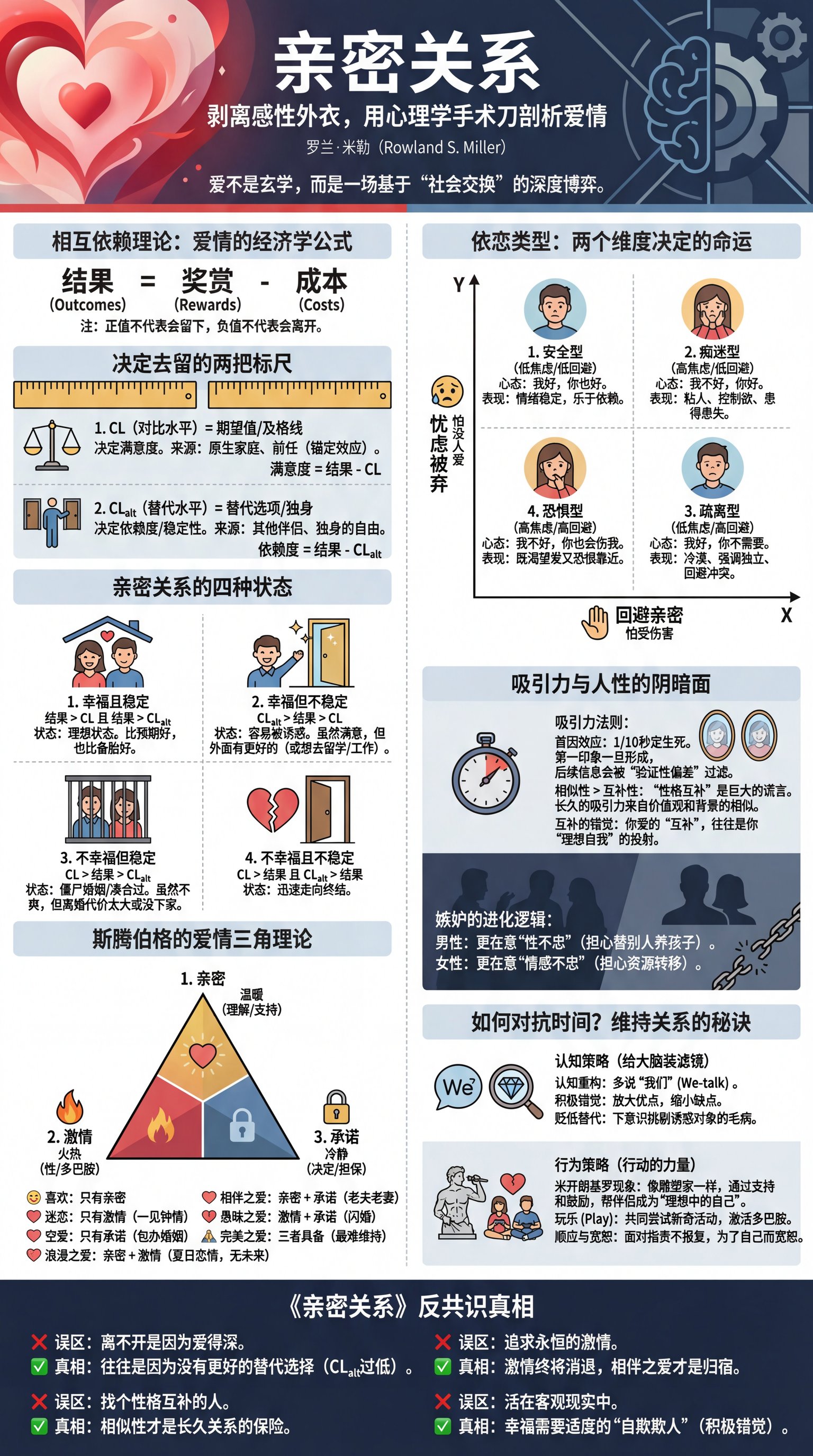 Rowland Miller’s *Intimate Relationships*: Stripping Off Sentimental Veils, Analyzing Love Through Psychology
Fei Xiaotong’s Reproduction Institutions: The Essence of Marriage Is a Contract for the Continuation of the Race
1. Introduction: Breaking the Myth That “Having Children Is Instinct”
Fei Xiaotong’s Reproduction Institutions, published in 1947, is not only a great work of sociology, but also a scalpel that precisely dissects the underlying logic of human society’s continuation. In common sense, we tend to think that having children is a biological instinct of human beings, a natural result of the love between the sexes. However, right at the beginning of the book, Fei Xiaotong proposes a thunderous idea: reproduction has never been a purely biological instinct, but a socially designed institution aimed at ensuring the continuation of the race.
1.1 The Conflict Between Racial Continuation and Individual Interests
From the perspective of a biological individual, reproduction is often a “losing deal.”
- Pain and risk: Ten months of pregnancy, the pain of childbirth, and subsequent breastfeeding and childcare impose an enormous physiological burden and survival risk on the mother’s body.
- Resource consumption: Raising offspring consumes huge amounts of food, energy, and time, directly crowding out the resources an individual could use to enjoy life.
- Contradiction with the pleasure principle: If humans merely followed the biological instinct of seeking benefit and avoiding harm, the vast majority of people would choose to gain pleasure through sex while trying their best to avoid the burdens brought by reproduction.
However, society as a whole must maintain its continuation through metabolism. If everyone only cared about individual pleasure and refused to bear the responsibility of reproduction, society would perish. Therefore, the essence of a reproduction institution is a set of arrangements whereby society, for the sake of racial continuation, uses culture, law, morality, and other means to coercively impose the responsibility of raising offspring on individuals. It is a contract between society and the individual, using the power of institutions to make up for the shortcomings of biological instinct.
1.2 Malinowski’s Theory of Levels of Needs
Fei Xiaotong was deeply influenced by his mentor Malinowski’s functionalism. In the discussion, we divide human needs into three levels to locate the role of the reproduction institution:
- Basic needs (biological): Such as appetite, sexual desire, safety, metabolism. This is the baseline for human survival as animals.
- Instrumental needs (institutional/cultural): Means derived for the purpose of satisfying basic needs. For example, in order to eat (a basic need), humans invented agricultural technology, tool production, and market exchange (instrumental needs). Reproduction institutions belong to this category. They are complex social means established to satisfy the basic need of “racial survival.”
- Integrative needs (spiritual/values): Such as religion, art, and philosophy. They are used to explain the first two types of needs, coordinate relationships between people and between humans and nature, and endow life with meaning.
Fei Xiaotong believes that although reproduction institutions are built upon the biological reproductive function, they have long transcended the realm of biology and become the most central “means” in the social structure.
2. The Evolution of Survival Strategies: From “Crabs” to “Humans”
To deeply understand why humans need such complex reproduction institutions, we need to introduce the r/K selection theory in biology to compare the survival strategies of different species.
2.1 r-Strategy: Winning by Quantity (e.g., Crabs, Insects)
- Living environment: Unstable, extremely high mortality, located at the bottom of the food chain.
- Energy allocation: They allocate most of their energy to producing a large number of reproductive cells. For example, the crab roe and crab fat that we prize when eating hairy crabs are actually the massive reproductive reserves crabs have accumulated for reproduction.
- Parenting pattern: “Only give birth, no raising.” Crabs lay tens of thousands of eggs at a time, but once they are laid, the parents no longer care. They rely on huge numbers to counter extremely high infant mortality; as long as one in a thousand offspring survive, the population can continue.
2.2 K-Strategy: Winning by Quality (e.g., Humans, Large Mammals)
- Living environment: Relatively stable, with complex social structures.
- Energy allocation: Humans drastically reduce the number of reproductive cells (normally giving birth to only one child after nine months of pregnancy), but shift their energy to postnatal care and education.
- Parenting pattern: Refined parenting. Human infants are physiologically premature and extremely fragile, requiring not only long-term breastfeeding, but also more than ten or even twenty years of socialization and education.
2.3 The Inevitability of Bilateral Parenting
Fei Xiaotong points out that human reproduction is not just “giving birth” in biological terms, but more crucially “raising” and “civilizing” in sociological terms.
- Limitations of unilateral parenting: In nature, many animals are raised solely by the mother (unilateral parenting). But in human society, because the growth period is too long and the survival skills required are too complex, relying only on the mother’s physiological functions and energy is far from enough to complete the task of turning a biological human into a social human.
- The introduction of the social father: To share the burden of the mother and establish a long-term stable environment for parenting, society must coercively involve males through institutions. This is the origin of “bilateral parenting.” The establishment of the father’s role is not due to biological instinct (since men can physically withdraw immediately after conception), but due to the coercive demand of social division of labor.
3. The Essence of Marriage: A Triangular Contract Establishing Parenting Responsibilities
In modern romantic narratives, marriage is regarded as the destination of love between the sexes. But in Fei Xiaotong’s sociological vision, marriage has nothing to do with love; it is a contract established to confirm bilateral parenting.
3.1 Marriage Is Not a Private Matter Between Two People
Marriage has never been the union of two people, but the union of two families or even entire social networks.
- Social intervention: From ancient times to the present, marriage has needed to be established through public ceremonies (weddings), legal registration, or the approval of families. These cumbersome procedures (such as the six traditional rites: proposing, asking the name, sending betrothal gifts, and so on) are essentially the intervention and supervision of this relationship by social forces.
- Exclusivity and responsibility: Through public contracts, marriage declares to society that this man and woman will form a cooperative relationship not limited to sex and will bear inescapable responsibility for the children who will be born in the future.
3.2 Core Structure: The Father-Mother-Child Triangle
Fei Xiaotong believes that the ultimate purpose of marriage is not to establish the spousal relationship, but to introduce a third party—the child.
- The stability of the triangle: Only when children are born does the “father-mother-child” triangular structure truly close, and the family can be considered complete. In Fei Xiaotong’s view, the child is the structural core of marriage.
- The incompleteness of childless marriage: In traditional Chinese society and many indigenous tribes, childless marriages are regarded as incomplete or even invalid.
- Case: The marriage customs of the Huadan Yao. Among the Huadan Yao in Guangxi, a man and woman are not considered to have formally established their relationship after marriage. Only when the woman becomes pregnant and gives birth is the marriage fully recognized by society. If there are no children for a long time, the marriage often faces dissolution, or it is necessary to “fill in” this triangle through adoption or other means.
3.3 The Triangular Logic Under Polygyny and the Concubine System
Some may ask whether China’s traditional polygyny (one legal wife plus multiple concubines) violates the triangular structure. Fei Xiaotong’s answer is no.
- A single social mother: In traditional extended families, although there may be multiple concubines (birth mothers), institutionally, a child has only one legitimate sociological mother—the official wife (the principal wife).
- Maintenance of the structure: No matter how many concubines the father has or who gives birth to the child, structurally they all belong to the core triangle of “father–principal wife–child.” Concubines are to some extent regarded as reproductive tools or assistants and do not undermine the core institutional triangle. This precisely proves that social institutions (status and title) can override biological facts.
4. The Eternal Conflict Between Sex and Society
Sex is the driving force of marriage, and also its enemy. In the book, Fei Xiaotong deeply analyzes the intense tension between sex and social structure.
4.1 Sex as “Bait”
In order to lure humans into bearing the heavy burden of reproduction, God (or natural evolution) designed intense pleasure into sexual behavior. This pleasure is bait that attracts men and women to unite. In pursuit of sexual joy, humans unwittingly jump into the trap of “having and raising children.”
4.2 Sex as a “Destroyer”
However, sex itself has great destructive power:
- Fluidity and novelty-seeking: Pure sexual drive is short-lived and fluid, and is often accompanied by a preference for the new over the old. This is diametrically opposed to the long-term, stable, and tedious cooperative relationship required for raising children.
- Exclusivity and jealousy: Sexual love carries a strong desire for exclusivity and easily triggers jealousy and conflict, which can destroy internal group cohesion.
4.3 Marriage as the Cage That Locks Up Sex
To prevent sexual impulses from undermining social stability, society must establish a marriage system to restrict sexual freedom.
- Standardization: Marriage stipulates who can have sex with whom and who has sexual rights over whom. It tames wild sexual impulses and turns them into a force that serves family reproduction.
- Clear distinctions inside and outside marriage: Society makes a sharp moral distinction between sexual behavior within marriage and sexual behavior outside marriage, with the aim of ensuring the stability of the parenting triangle.
4.4 A Sociological Explanation of the Incest Taboo
Why do all human civilizations strictly prohibit incest? Modern people often explain it as eugenics (to avoid genetic diseases), but ancient people had no knowledge of genes. Fei Xiaotong offers a purely sociological explanation: the incest taboo exists to maintain clarity of social roles.
- Role confusion: If a father mates with his daughter, they are both father and daughter and husband and wife at the same time; the resulting child is both a grandchild and a child. Such role confusion will completely destroy the authority structure and division of labor in the family. The family is the cell of society; if the internal structure of the cell collapses, the entire social organization will disintegrate.
- The necessity of exogamy: The incest taboo forces descendants to seek spouses outside their own family. This allows originally isolated family units to form a huge, intertwined social network (kinship network) through marriage alliances. Such a network enhances social integration and resilience. The essence of the incest taboo is to force the family to open outward and thereby construct society.
5. Recognizing Parents: Social Status Overriding Biological Blood Ties
One of the most brilliant parts of Fei Xiaotong’s theory is his demonstration of how social parenthood replaces biological parenthood institutionally. In many cultures, who a child’s parents are is not determined by genes, but by institutions.
5.1 The “Fatherless” Culture of the Trobriand Islands
Fei Xiaotong cites Malinowski’s fieldwork on the Trobriand Islands, which is highly subversive.
- Reproductive beliefs: The local natives completely deny any biological role of men in reproduction. They believe that children are “spirits” (ghosts) of ancestors wandering in the sea, who are reincarnated by entering the mother’s body through the top of her head.
- The role of the father: Since children are spirits reincarnated, what is the use of sexual intercourse? The natives’ explanation is: a man’s role is merely to “open the gate,” that is, to open the birth canal and allow the child’s spirit to enter. Or in other words, the father is only the mother’s husband, the one who helps the mother raise the children.
- Conclusion: In this culture, there is no concept of blood ties between fathers and children, but this in no way prevents fathers from shouldering parenting responsibilities. This proves that fatherhood is conferred by society, not determined by biology.
5.2 Dream of the Red Chamber: Tanchun’s Pain and Persistence
The classic Chinese novel Dream of the Red Chamber provides another excellent case.
- Biological fact: Jia Tanchun is born of Concubine Zhao; Concubine Zhao is her biological mother.
- Social fact: Under the patriarchal clan system, Lady Wang (the primary wife) is the only legitimate mother (嫡母) of all the children.
- Tanchun’s choice: In order to maintain her social status as a “mistress” and “young lady,” Tanchun must strictly follow the system in public, acknowledging only Lady Wang as her mother, even acting cold and cruel when Concubine Zhao is humiliated or makes unreasonable trouble.
- Analysis: Tanchun’s suffering precisely reflects the suppression of biological parent–child relationships by institutionalized parent–child relationships. In a large clan, who you acknowledge as your mother is prescribed by ritual and morality; feelings and blood ties must give way.
5.3 African “Lobola” (Bridewealth) and the Ownership of Children
The book also mentions the “Lobola” custom among the Bantu people in South Africa and other tribes.
- The meaning of cattle: At marriage, the groom must give the bride’s family a herd of cattle, which is called “Lobola.” This is not simply a price for buying a wife; it is more like a credential for purchasing the rights to the children.
- Contract enforcement:
- Once the cattle have been delivered, all the children this woman later gives birth to legally belong to the husband’s clan, even if those children are fathered by her lovers (their biological father is not the husband). Society recognizes the cattle, not the sperm.
- If they divorce, the bride’s family must return the cattle to the husband. This is like “refunding a ticket”: when the cattle are returned, the ownership of the children is likewise transferred or cancelled.
- Implication: This shows that in a functionalist perspective, bridewealth in marriage serves as a legal procedure for establishing social fatherhood and rights of inheritance.
6. Analyzing Social Structure: Patrilineality, Patriarchy, and Patrilocality
In discussing family structure, Fei Xiaotong carefully distinguishes several easily confused concepts; together they form the backbone of how traditional society operates.
6.1 Distinguishing Three Dimensions
- Patrilineal: Refers to the way descent is transmitted. Children’s surnames and lineage follow the father. This exists to solve issues of social continuity, ensuring a clear main line of intergenerational transmission.
- Patriarchal: Refers to the way power is distributed. Decision-making power and economic power within the family are held by the male head of household. This is usually related to men’s dominant role in agricultural production and armed protection in traditional societies.
- Patrilocal: Refers to residence patterns. After marriage, the woman moves to live with the man’s family. This is the traditional Chinese model of “taking a bride into the household.”
6.2 Why Patrilocality?
Fei Xiaotong believes the patrilocal pattern is the most economical way to maintain the stability of a patrilineal society.
- Stability of cooperative groups: Agricultural society needs a stable labor force combination. Men grow up locally, familiar with the land and production techniques; if they do not move, productivity is highest.
- Mobility of women: By contrast, in the traditional division of labor, women mainly undertake weaving, housework, and childcare—skills that are less dependent on the land. Therefore, the movement of women (marrying out) has relatively little impact on the economic structure.
6.3 The Difference Between “Family” and “Household”
- Family: An extended kin group that includes deceased ancestors and unborn descendants; it is a longitudinal, continuous concept.
- Household: The actual economic unit of people who live together and share meals.
- Reality: Although traditional ideals extol large families with “four generations under one roof,” in actual fieldwork Fei Xiaotong found that due to economic constraints in rural China, most families were in fact small nuclear families (small households) centered on a married couple. The proportion of several generations truly living together without splitting into separate households was not high.
7. The Art of Spousal Cooperation: Respectful Distance and Emotional Isolation
Since traditional marriage is essentially a business partnership, how to handle emotions between spouses becomes an art.
7.1 The Sociological Truth of “Mutual Respect as if Guests”
We usually think “mutual respect as if guests” describes a loving couple, but in Fei Xiaotong’s view it is actually a psychological isolation mechanism.
- Avoiding friction: Marriage requires extremely close, long-term cooperation. If the emotions between two people are too intense, their mood swings will be large, easily giving rise to conflicts and entanglements of love and hate, which then harm cooperative efficiency (for example, refusing to cook or farm because of a quarrel).
- Politeness equals distance: One only needs to “respect” and be polite to guests. When spouses maintain this kind of politeness, they are in fact drawing a safe psychological distance to prevent emotional overflow from disrupting order. Rather than love, it is more like a deliberate coldness and courtesy to stabilize cooperation.
7.2 Spatial Isolation
Apart from psychological isolation, traditional society also reduces spousal conflict through physical separation.
- Men outside, women inside: Strict division of labor means men and women hardly see each other during the day.
- Separate living spaces: In many traditional dwellings, the living areas of men and women are separated. In some ethnic customs, even after marriage the man continues to live in a communal house or his mother’s home, visiting his wife only at night. Such visiting marriages or separate residence forms also serve to reduce contact, lower friction, and prolong the marriage.
7.3 The Fragility of Modern Marriage
In contrast, in modern society:
- Economic bonds are broken: Production leaves the family (people work in companies), and domestic work is socialized (takeout, housecleaning services). Spouses are no longer a life-and-death economic unit.
- Excessive emotional dependence: Modern marriage rests almost entirely on emotion and sexual attraction.
- Result: Since emotions are fluid, marriage becomes extremely unstable. Once love fades, the marriage loses its rationale for existence. This is the structural reason for persistently high divorce rates today.
8. Modern Implications: Low Fertility and the Future of Humanity
8.1 The Costly, Other-Benefiting Calculation of Childbearing
Fei Xiaotong’s theory perfectly explains today’s low-fertility crisis.
- In the past: Childbearing brought extremely high “social benefits” (continuing the family line was like a religious belief) and “economic benefits” (children supported parents in old age, and increased labor).
- Now: With socialized elderly care and the rise of individualism, the benefits of childbearing have dropped to zero, even gone negative (hurting career development, lowering quality of life).
- Conclusion: When having children becomes a purely costly, other-benefiting act (sacrificing personal resources for the continuation of the human species), rational individuals naturally choose not to reproduce. This leads to phenomena similar to the “mouse utopia” (Universe 25) experiments: in a closed environment with abundant resources but no social goals, individuals gradually lose the drive to reproduce, and the population ultimately goes extinct.
8.2 From Genes to Design Entities
At the end of the discussion, we broaden our perspective to the ultimate picture of human evolution, citing AI pioneer Richard Sutton’s view, which divides life forms into three stages:
- Stage One: Genes. Relying on biological instincts to blindly replicate, with no understanding of their own mechanisms.
- Stage Two: Culture/Design. Humans, through cultural designs such as The Institution of Reproduction, use acquired institutions to compensate for genetic defects and consciously regulate reproduction.
- Stage Three: Design Entities (AI). Future life forms (such as strong artificial intelligence) will be able to fully understand their own structure and consciously design and manufacture the next generation, completely breaking free from the constraints of biological reproduction.
Fei Xiaotong’s The Institution of Reproduction reveals that human beings are no longer mere animals; we use institutions to fight instincts and reason to construct society. In the future, we may complete yet another leap in the form of life through technology.
Rowland S. Miller’s Intimate Relationships: Stripping Away Sentiment to Analyze Love with Psychology
This in-depth dialogue centers on Rowland S. Miller’s psychological magnum opus Intimate Relationships. This book enjoys extremely high status in psychology and is widely regarded as an authoritative textbook in American university psychology programs. Unlike popular self-help works such as Men Are from Mars, Women Are from Venus, Intimate Relationships does not rely on anecdotes or stereotypes; it is built entirely on rigorous social psychology, evolutionary psychology, and a large body of empirical research.
Part One: Interdependence Theory — The Economic Logic of Intimate Relationships
Intimate relationships feel complex and hard to control because they are not merely emotional projections between two independent individuals; they are also a deep game based on “social exchange.” The Interdependence Theory presented in the book gives us a very penetrating perspective: it quantifies relationships by calculating “costs” and “rewards” to assess a relationship’s satisfaction and stability.
1. Core Concept One: Outcomes
In any relationship, we seek to obtain the greatest rewards at the lowest cost.
- Rewards: Any beneficial or pleasurable experiences we gain from interacting with others. These include direct material benefits (money, gifts), emotional support (love, understanding, respect), and even sensory pleasure (sexual satisfaction, the visual enjoyment of an attractive partner).
- Costs: The price we pay in a relationship and the other opportunities we have to forgo because of it. These include money spent, time invested, psychological burdens (such as quarrels, jealousy, anxiety), and physical suffering (such as domestic violence).
- Outcome formula:
Outcome = Rewards - Costs- If the outcome is positive, we are “profiting” from the relationship; if it is negative, we are “losing.” But merely knowing whether the outcome is positive or negative does not determine whether we stay or leave. This leads to two crucial reference standards: CL and CLalt.
2. Core Concept Two: Comparison Level (CL) — The Yardstick of Satisfaction
Comparison Level (CL) refers to the internal “passing line” or “expectation level” for intimate relationships that we build based on either past experiences or observation of our peers. It directly determines our satisfaction in a relationship.
- Formula:
Satisfaction = Outcomes - Comparison Level (CL) - How CL forms: CL is mainly shaped by our past.
- Influence of the original family: If someone grows up in a very loving family with deeply affectionate parents and a harmonious atmosphere, their expectations (CL) for a partner’s care and communication will be extremely high.
- Influence of ex-partners: This is where the discussion focuses on the “anchoring effect.”
- In-depth analysis of the “rich second-generation ex” case:
- Suppose someone once dated a “rich second generation.” In that relationship, the partner provided very high material enjoyment (luxury cars, designer goods, upscale travel) and extremely high emotional value (always available, constant romantic surprises).
- After the breakup, this person’s CL becomes anchored at the high level set by that ex.
- When they start a new relationship, even if the current partner is objectively not bad (for example, a financially stable middle-class person with a gentle personality) and the “outcomes” are positive,
- As long as the outcomes provided by the current partner fall below the elevated CL shaped by the ex, the person will feel dissatisfied.
- This is the psychological explanation for the ancient line “Having seen the vast ocean, no other water will do; having climbed Mount Wu, no other clouds appeal.” The sense of loss does not arise because the current partner is bad, but because the reference point (CL) is too high.
- Not limited to material aspects: This kind of comparison also applies to sexual compatibility, the intensity of emotional support, and so on. People with a high CL have a very low tolerance for relational shortcomings and are prone to disappointment and a sense of deprivation.
3. Core Concept 3: Comparison Level for Alternatives (CLalt) — The Anchor of Stability
Comparison Level for Alternatives (CLalt) refers to the best alternative option we could obtain if we left our current relationship. This includes not only other potential partners, but also the option of being single. CLalt determines our dependence on the relationship, i.e., its stability.
Formula:
Dependence = Outcomes - Comparison Level for Alternatives (CLalt)The essence of CLalt: It measures the “opportunity cost” and “destination” of leaving.
- If
Outcomes > CLalt, regardless of whether we are satisfied, we tend to stay in the relationship because leaving would be worse. - If
Outcomes < CLalt, even if we are relatively satisfied with the status quo, once outside temptation is strong enough, the relationship becomes precarious.
- If
A vivid workplace interview analogy:
To fully understand CLalt, let’s compare it to job hopping:- High dependence (an underpaid seasoned expert):
- Imagine a top expert in a highly niche field (such as ancient cuneiform studies).
- Their skills are very strong (high personal value), but they only recognize top institutions like “Microsoft Research Asia” (MSR) as acceptable employers and see nowhere else to go.
- Even if Microsoft only offers mediocre compensation (average outcomes), or the work environment is stifling (low satisfaction), they still won’t resign. Why? Because their CLalt is extremely low—if they leave, they can’t find a better or even equivalent platform.
- In relationships, this corresponds to those who feel “you’re the only one for me” or “at my age, who else could I find if I left you?” They have an extremely high dependence on the relationship.
- Low stability (an employee holding an OpenAI offer):
- Imagine you work in a small, ordinary company. The pay is okay and the work is easy (outcomes are decent, satisfaction is acceptable).
- Suddenly, one day, OpenAI gives you an offer with double the salary and unlimited prospects (your CLalt skyrockets).
- Even though nothing has changed in your current company, your dependence on it instantly drops to zero, and you are very likely to resign.
- In relationships, this is the mindset of “riding one donkey while looking for a horse.” Once a higher-quality potential partner appears (high CLalt), a relationship that seemed harmonious can collapse instantly.
- High dependence (an underpaid seasoned expert):
Why do people endure suffering but still not leave?
- This is a very typical social phenomenon: many people remain in marriages full of domestic violence, emotional abuse, or extreme coldness (Outcomes far below CL, extremely dissatisfied) yet still choose to stay.
- The reason is an extremely low CLalt. The victim may believe they lack the financial ability to live independently, or that the loneliness and social stigma after divorce would be worse than their current pain (Outcomes of being single < current situation).
- In addition, prolonged abuse can destroy a person’s self-esteem, causing them to subjectively underestimate their CLalt and think “no one would want me anymore.” Only when they realize they can live independently, or when they meet someone willing to rescue them (CLalt rises), will the relationship finally dissolve.
4. The Four-State Model of Intimate Relationships
By combining CL (expectations), CLalt (alternatives), and current Outcomes, we can exhaust all possible interpersonal relationship states:
Happy and Stable:
Outcomes > CLandOutcomes > CLalt- Your current partner is better than you expected and better than anyone else you could find outside. This is the ideal relationship state.
Happy but Unstable:
CLalt > Outcomes > CL- You are satisfied with your current partner (above the passing line), but you find there are better options outside, or you feel being single would be freer and more enjoyable.
- This type of relationship is very fragile. The person is easily swayed by external temptations, or although they like their partner, they don’t want to be tied down. For example: your current partner is great, but you get an opportunity to study abroad (a better alternative), and you might choose to break up.
Unhappy but Stable:
CL > Outcomes > CLalt- This is the so-called “zombie marriage” or “just making do.”
- You are very dissatisfied with the status quo (below expectations), but you feel the cost of divorce is too high, or that you’re too old to find someone new, or you stay for the children (the alternatives are worse than the status quo).
- Such relationships are filled with resentment and helplessness, but because of a lack of courage or resources to leave, the two people are “locked” together.
Unhappy and Unstable:
CL > OutcomesandCLalt > Outcomes- The relationship fails to meet expectations, and there are better alternatives outside. Such relationships typically end quickly.
Part II: Friendship and Love — Boundaries, Scales, and the Triangular Theory
How can we scientifically distinguish “liking” from “loving”? Are they simply different intensities of the same feeling, or are they qualitatively different?
1. Zick Rubin’s Scales of Liking and Loving
Psychologist Zick Rubin developed well-known scales to distinguish these two emotions. Empirical research has found that liking and loving are two distinct dimensions in psychological experience:
Liking Scale: Primarily focuses on affection and respect. It is a positive evaluation of another person.
- Typical items:
- “My partner is one of the most likable people I know.” (affection)
- “My partner is the sort of person I would like to be.” (identification and respect)
- “I think my partner is an extremely intelligent person.” (recognition of competence)
- If you score highly for someone on this scale, it means you appreciate them; they are a good friend to you, but that is not necessarily love.
- Typical items:
Loving Scale: Beyond affection, love must include three unique, exclusive components:
- Attachment: A strong need for physical closeness and emotional dependence on the other person; feeling that “without him/her, my life would be bleak.”
- Caring: The embodiment of altruism; a willingness to sacrifice for the other person and put their interests above your own: “I would do anything to make him/her happy.”
- Intimacy: Deep trust and self-disclosure; a willingness to share the most private secrets and to build an exclusive emotional bond.
2. Sternberg’s Triangular Theory of Love
Robert Sternberg proposed the famous Triangular Theory of Love, arguing that perfect love consists of three components. Different strengths and combinations of these three form eight types of love:
- Intimacy: The emotional dimension. It includes understanding, communication, support, and sharing. It feels “warm.”
- Passion: The motivational and physical dimension. It includes physiological arousal, sexual desire, and physical attraction. It feels “fiery” and is mainly driven by dopamine.
- Commitment: The cognitive dimension. It includes the rational decision “to love this person” and the long-term pledge “to maintain this relationship.” It feels “cool-headed.”
In-depth look at the eight types of love:
- Nonlove: None of the three components is present. This is how we are with most strangers we encounter.
- Liking: Only intimacy. This is deep friendship without passion or commitment.
- Infatuation: Only passion. Usually seen as love at first sight or adolescent crushes. It comes quickly and goes quickly, lacking understanding and commitment.
- Empty Love: Only commitment. For example, arranged marriages formed just to get married, or marriages that are emotionally broken but maintained reluctantly for the sake of children or property.
- Romantic Love: Intimacy + passion. For example, a summer fling. The two enjoy great conversation and strong sexual attraction but both know they will separate when summer ends, with no commitment to a future.
- Companionate Love: Intimacy + commitment. For example, elderly couples who have been together for many years. Passion fades with age and time, but there is deep mutual understanding and firm commitment. This is the most stable and feasible model for long-term marriage. Physiologically, it is driven by oxytocin rather than dopamine, bringing peace and attachment.
- Fatuous Love: Passion + commitment. Similar to a shotgun wedding. Two people make a lifetime commitment based on hormonal impulse (passion) before truly understanding each other (lack of intimacy). Such relationships are very risky because their foundation is unstable.
- Consummate Love: All three components are present. This is the ideal state everyone longs for, but also the hardest to maintain and requires ongoing effort.
Part III: Attachment Styles — A Fate Shaped by Two Dimensions
Where does our sense of security in relationships come from? Why are some people clingy while others are distant? This is closely related to attachment styles.
1. Four Core Components of Attachment
Attachment is not just a feeling; it consists of a specific set of behavioral patterns. Whether it’s an infant with their mother or an adult with their partner, a healthy attachment relationship typically includes the following four elements:
- Proximity Seeking: The most basic manifestation of attachment. The individual desires to maintain physical or psychological closeness with the attachment figure. In adult relationships, this appears as wanting to be with the partner and enjoying time together.
- Separation Protest: When the attachment figure leaves or the attachment relationship is threatened, the individual experiences pain, anxiety, and resistance. This painful sense of “not being able to separate” is precisely what proves the existence of an attachment bond.
- Safe Haven: When the individual encounters fear, stress, or threat, they turn to the attachment figure for comfort and emotional support. A partner is the place we can return to for healing when we are hurt.
- Secure Base: This is the courage to explore the world that an attachment relationship grants the individual. As long as they know the attachment figure is there backing them up, they dare to leave their side to explore the unknown and face challenges. A good partner is not only a safe haven but also a solid backing that helps you fly higher.
2. Two Independent Dimensions: Anxiety and Avoidance
First it’s important to clarify a common misconception: attachment styles are not several mutually exclusive “boxes,” but a coordinate system composed of two independent dimensions. Anyone can be high or low on each of these two dimensions.
- Anxiety about Abandonment: This dimension measures the extent to which a person worries others will see them as unworthy and fears their partner will leave them.
- High-anxiety individuals: constantly afraid of rejection, with low self-worth.
- Low-anxiety individuals: confident in themselves, not worried about being abandoned.
- Avoidance of Intimacy: This dimension measures the extent to which a person, due to distrust of others, feels uncomfortable and thus resists getting close to people.
- High-avoidance individuals: suspicious of others, keep their distance, and believe it’s best to rely on themselves.
- Low-avoidance individuals: happy to get close and find it easy to trust others.
3. In-Depth Portraits of the Four Attachment Styles
Based on the combinations of high or low levels on the above two dimensions, four typical attachment styles emerge:
- Secure —— Low Anxiety, Low Avoidance:
- Characteristics: This is the most ideal and healthiest pattern. They have confidence in themselves (“I’m not afraid you’ll leave”) and they also trust others (“I’m not afraid of you getting close”).
- Relationship patterns: Secure people are easier to get along with in relationships. They’re not easily jealous and are more willing to forgive. They are happy to depend on their partner and to be depended on. It’s not that they lack emotions, but their emotions are more stable, more optimistic, and they are more socially skilled.
- Preoccupied —— High Anxiety, Low Avoidance:
- Mindset: “I’m not good, but you are good.”
- Patterns: They desperately crave intimacy, even wanting to “merge into one” with the other person. But they are full of fear inside, constantly feeling their partner doesn’t love them enough, which shows up as clinginess, strong need for control, and constant insecurity. Their emotions are like a roller coaster, completely driven by their partner’s reactions.
- Dismissing —— Low Anxiety, High Avoidance:
- Mindset: “I’m fine, I don’t need you.”
- Patterns: They usually hold themselves in high regard and believe “relationships are troublesome,” emphasizing independence. Even if they have needs inside, they will suppress them and appear cold and distant. When conflict arises, their first reaction is to “withdraw” or “stonewall.”
- Fearful —— High Anxiety, High Avoidance:
- Mindset: “I’m not good, and you’re not good/you will hurt me.”
- Patterns: This is the most painful style and is usually rooted in severe trauma. They both crave love (because of high anxiety) and are extremely afraid of being hurt (because of high avoidance). When someone approaches, they run away out of fear; when the person leaves, they panic because of abandonment.
4. The Deep Imprint of the Family of Origin: Nature and Nurture Intertwined
Attachment style does not appear out of thin air; it is deeply rooted in our childhood and shaped by both genetic predispositions and caregiving.
- Innate factors (40%): The baby’s temperament plays an important role. Some babies are naturally easy-going and cheerful (easy baby), easy to soothe; some are naturally sensitive, irritable, and difficult to care for (difficult baby). This inborn disposition influences how the mother provides care.
- Caregiving (60%): The responsiveness of the mother (primary caregiver) is key.
- Secure mothers: They can sensitively perceive the baby’s needs and respond in a timely way. Such mothers tend to raise secure children. Even if the child’s inborn temperament is more difficult, the mother’s patience can have a moderating effect.
- Anxious/cold mothers: If the mother is inconsistent—sometimes warm, sometimes cold—or shows annoyance and rejection when the child cries, the child will form an insecure attachment.
- Intergenerational transmission: Research finds that attachment style is strongly intergenerational. Secure mothers tend to raise secure children, whereas insecure mothers are more likely to pass this insecurity on to the next generation.
Part 4: Attraction and First Impressions —— Cognitive Shortcuts and Biases in the Brain
Before a relationship begins, what determines who we move toward? The book reveals many cognitive biases behind attraction.
1. Fatal “First Impressions” and the Primacy Effect
- A life-or-death judgment in 1/10 of a second:
- Studies show that after seeing a stranger’s face, our brain needs only 0.1 to 1 second to make a judgment about the person’s attractiveness (whether we’d like to date them) and trustworthiness (whether we’d like to be friends).
- Subsequent interaction (such as a 3-minute small talk) often just serves to validate this instantaneous judgment. If there’s no spark at first sight, the chance of a “comeback” later is very low.
- Primacy Effect:
- Information we receive first has a disproportionately large impact on our judgments.
- Experimentally demonstrated: If the same person is introduced to two groups:
- Group A hears, in order: intelligent, hardworking, impulsive, picky, stubborn, jealous.
- Group B hears, in order: jealous, stubborn, picky, impulsive, hardworking, intelligent.
- Results show that Group A’s evaluation of this person is significantly more positive than Group B’s. “Intelligent” and “hardworking” created a positive first-impression filter, and later flaws were seen as “quirks of a smart person”; the negative filter in Group B made later strengths ignored or distorted.
- This shows that once we form a first impression, all subsequent information processing is influenced by confirmation bias—we focus only on information that confirms our original impression.
2. Who Can Predict a Relationship’s Future?
- The blindness of the people involved: Couples in love are usually poor at predicting how long their relationship will last. They are blinded by “positive illusions,” overestimating the strength of their bond and ignoring potential risks.
- Women friends’ insight (girlfriends/roommates): A woman’s female friends tend to make the most accurate predictions about the future of her relationship.
3. Similarity vs. Complementarity: Debunking the “Opposites Attract” Myth
- Similarity is the cornerstone of lasting attraction:
- A large body of empirical research in psychology shows that “birds of a feather flock together” is closer to the truth. Long-term attraction comes from similarity, including:
- Demographics: age, ethnicity, educational background, religious belief.
- Values and attitudes: views on money, politics, parenting.
- Personality: extroverts tend to pair with extroverts, and so on.
- A large body of empirical research in psychology shows that “birds of a feather flock together” is closer to the truth. Long-term attraction comes from similarity, including:
- The illusion of complementarity:
- We often say “complementary personalities,” such as introverts being drawn to extroverts, but this is often an illusion.
- Projection of the ideal self: When we’re attracted to someone very different from us, it’s often not because we like “difference” itself, but because the other person has qualities we want to have but currently lack (our ideal self).
- For example, someone who wants to be socially adept but is in fact very shy may fall in love with a social butterfly. What they actually love is the “self they wish to become.”
- Real complementarity: True, beneficial complementarity is mostly limited to functional aspects or behavioral patterns (for example, one likes to cook, the other likes to wash dishes; or one likes to lead, the other prefers to follow), not direct opposition in core personality or values.
Part 5: The Dark Side of Relationships —— Jealousy, Deception, and Betrayal
1. Two Forms of Jealousy and Evolutionary Differences
- Reactive Jealousy: A normal psychological reaction to real threats (such as a partner cheating or flirting).
- Suspicious Jealousy: Suspicion and paranoia without solid evidence. This usually arises from high Neuroticism or low self-esteem.
- Gender differences from an evolutionary perspective:
- Men are more sensitive to sexual infidelity: From an evolutionary standpoint, the greatest risk for men is “paternity uncertainty.” If their partner cheats physically, they may end up raising another man’s child, a complete failure in terms of passing on their genes. Thus men show stronger physiological responses (heart rate, anger) to sexual infidelity.
- Women are more sensitive to emotional infidelity: Women can be sure their children are biologically theirs, but their main risk is that a man will transfer his resources (food, protection) to another woman and her offspring, threatening the survival of her own children. Thus women find emotional infidelity harder to forgive.
2. Deception and “Deceiver’s Distrust”
- Self-serving bias of liars: Most liars believe their lies are “well-intentioned” or “to avoid conflict” rather than malicious. But once the lie is discovered, the deceived person usually sees it as a serious betrayal and a trampling of trust.
- Deceiver’s Distrust: This is a very interesting psychological mechanism: people who lie frequently tend to believe others are lying as well.
- The reason is that, to ease their own cognitive dissonance (“I’m a good person, but I lie”), they subconsciously tell themselves “everyone lies; I’m doing this to protect myself.” As a result, deceivers actually have lower trust in others.
Part 6: The Dissolution and Death of Relationships
A breakup is not a single moment but a long, staged process.
1. The Costs of Divorce and Breakups
- Long-term blow to happiness: Studies show that divorce can be devastating to well-being. Some people find it hard to fully return to their pre-marriage happiness level even years after divorce. The impact of widowhood on happiness can be even greater than divorce; some widowed individuals still often think of their lost partner 20 years later and never fully recover to their pre-loss level of happiness.
- Health effects: A bad relationship is worse for health than being single. Staying in a marriage full of hostility weakens the immune system and increases the risk of heart disease.
2. Steve Duck’s Five-Stage Model of Breakups
- Intrapsychic Phase:
- Internally starting to think, “I can’t take this anymore.”
- Privately evaluating the partner’s flaws and weighing pros and cons, but not yet telling anyone.
- Dyadic Phase:
- Laying it out to the partner.
- Conflict, negotiation, blame, or confrontation occur. This is the critical period when the relationship may be repaired or completely break down.
- Social Phase:
- Making the breakup public to friends and family.
- Seeking allies, starting to tell “one’s own version” of the story, shifting blame to the other person, and defending one’s social image.
- Grave-dressing Phase:
- The relationship has fully ended.
- Sorting through memories and crafting a “breakup narrative” that restores psychological balance. People usually cast themselves as the victim or the innocent party to protect self-esteem, and this narrative becomes the “epitaph” of the relationship.
- Resurrection Phase:
- Re-entering a new life and beginning to look for a new partner.
Part Seven: Maintaining and Repairing Relationships – How Do We Fight Time?
If passion is destined to fade, how do we maintain a long-term relationship? The book proposes evidence-based cognitive and behavioral maintenance strategies.
1. Cognitive Maintenance Strategies: Putting a “Beauty Filter” on the Brain
Happy partners construct a unique cognitive system to protect the relationship:
- Cognitive Interdependence:
- Linguistic changes: Happy partners use plural pronouns like “we” (We-talk) more often, instead of “I” or “he/she.”
- Psychological merging: They see their partner as part of themselves—when one thrives, both thrive; when one suffers, both suffer.
- Positive Illusions:
- We idealize our partners, seeing them as better than an objective evaluation would suggest, even better than they see themselves.
- This “filter” is not blind; it focuses on the big picture, minimizing flaws and maximizing strengths. It works as a protective umbrella for relationship happiness.
- Derogation of Tempting Alternatives:
- This is an unconscious loyalty mechanism.
- Studies show that happy partners, when seeing photos of attractive strangers, will subconsciously look for their flaws (“He looks a bit dumb,” “Her makeup is too heavy”), or reduce the amount of time they look at them.
- In this way, they artificially lower the appeal of alternatives (CLalt), thus protecting the stability of their current relationship.
- Perceived Superiority:
- Believing “our relationship is better than most people’s.” This somewhat blind confidence boosts their ability to face difficulties.
2. Behavioral Maintenance Strategies: The Power of Action
- The Michelangelo Phenomenon:
- Just as Michelangelo said he “removed the excess marble to let David emerge” when sculpting David.
- The best partners are like sculptors. Through support and encouragement, they help us chip away what’s unnecessary and gradually become our ideal selves. This sense of mutual growth is a key source of relationship satisfaction.
- Accommodation:
- When a partner loses their temper, criticizes, or behaves badly, instead of retaliating (an eye for an eye), one responds with constructive tolerance and de-escalation.
- This requires strong self-control but effectively prevents conflicts from escalating.
- Play:
- Engaging together in novel, exciting activities (such as skiing, hiking, traveling, learning new skills) activates the brain’s reward system (dopamine).
- Don’t always go to the same restaurant; that’s the breeding ground for killing passion. Linking the relationship with joy and excitement is the best weapon against the fading of passion.
- Willingness to Sacrifice:
- Being willing to sacrifice personal interests for the good of the relationship as a whole.
- For example: moving for a partner’s job, or simply watching a movie you’re not interested in just to accompany them. The key is that the sacrifice is voluntary, not forced.
- Forgiveness:
- Forgiveness is not for the other person, but to free yourself from the negative emotions of resentment and revenge.
- Those who can sincerely forgive their partner’s mistakes are physically and mentally healthier and have longer-lasting relationships.
3. Canary’s Relationship Maintenance Strategies (Canary’s Strategies)
Daniel Canary summarized five of the most effective maintenance strategies:
- Positivity: Stay optimistic, and make interactions pleasant, polite, and enjoyable when you’re together. This is the most important point.
- Openness: Encourage self-disclosure, share thoughts and feelings, and discuss the relationship itself.
- Assurances: Express love, loyalty, and commitment to the future (“I will always love you”).
- Social Network: Have mutual friends and gain support from family and friends.
- Sharing Tasks: Fairly share housework and life responsibilities (such as cooking and cleaning together). This is crucial in cohabiting and marital relationships.
Summary: The Anti-Consensus Truths
The most striking aspect of the book Intimate Relationships is not that it teaches us how to be romantic, but that it reveals many counterintuitive, anti-consensus harsh truths. They may not sound pleasant, but they are the foundation for understanding relationships:
Relationships are not pure emotion; they’re cold calculations:
The reason we stay in a relationship is often not how deeply we love, but that we don’t have better alternatives (CLalt). When someone says “I can’t live without you,” it may simply mean “I can’t find anyone better than you” or “the cost of leaving you is too high.”“Opposites attract” is a huge lie:
Don’t expect to find someone with the opposite personality to “complement” you. The differences that attract you at first will eventually become the points of conflict that drive you crazy. Similarity is the only real insurance for a long-term relationship.Passion is destined to die out:
No matter how intense the romance, dopamine-driven passion will fade within a few years. If you don’t accept this and shift in time to oxytocin-driven “companionate love,” the relationship will almost certainly break down. Chasing eternal passion is the fast track to disappointment.Your fate may be determined in the crib:
Your anxiety or avoidance in love (attachment style) largely replicates the interaction patterns you had with your mother as an infant. While it can be changed, this “factory setting” from your family of origin has an extremely deep impact.
In this uncertain world, recognizing these “anti-consensus” truths is not meant to make us despair about love, but to help us abandon illusions and use more rational, scientific methods to cultivate the relationships that are truly worth cherishing.